Plan Your Trip
Line 1, Line 2, 48-hour passes and when a water taxi is the right call. Plus the obvious point: Venice is small enough to walk.
TLDR
Buy a 48-hour or 72-hour vaporetto pass (35 to 45 euros) on the Venezia Unica site, use Line 1 and Line 2 as your water bus, and walk the rest of the time. Venice is 3km end to end, so most stays are 15 to 25 minutes from St Mark’s on foot. Water taxis make sense once or twice per trip: early arrivals, late departures, and when four people can split the fare.
Insider Tip
Don’t pay 9.50 euros for a single vaporetto ticket more than twice. If you will use the boats three times in a day, the 24-hour pass pays for itself. Validate the pass at the yellow reader on the pontoon before you step onto the boat, not after.
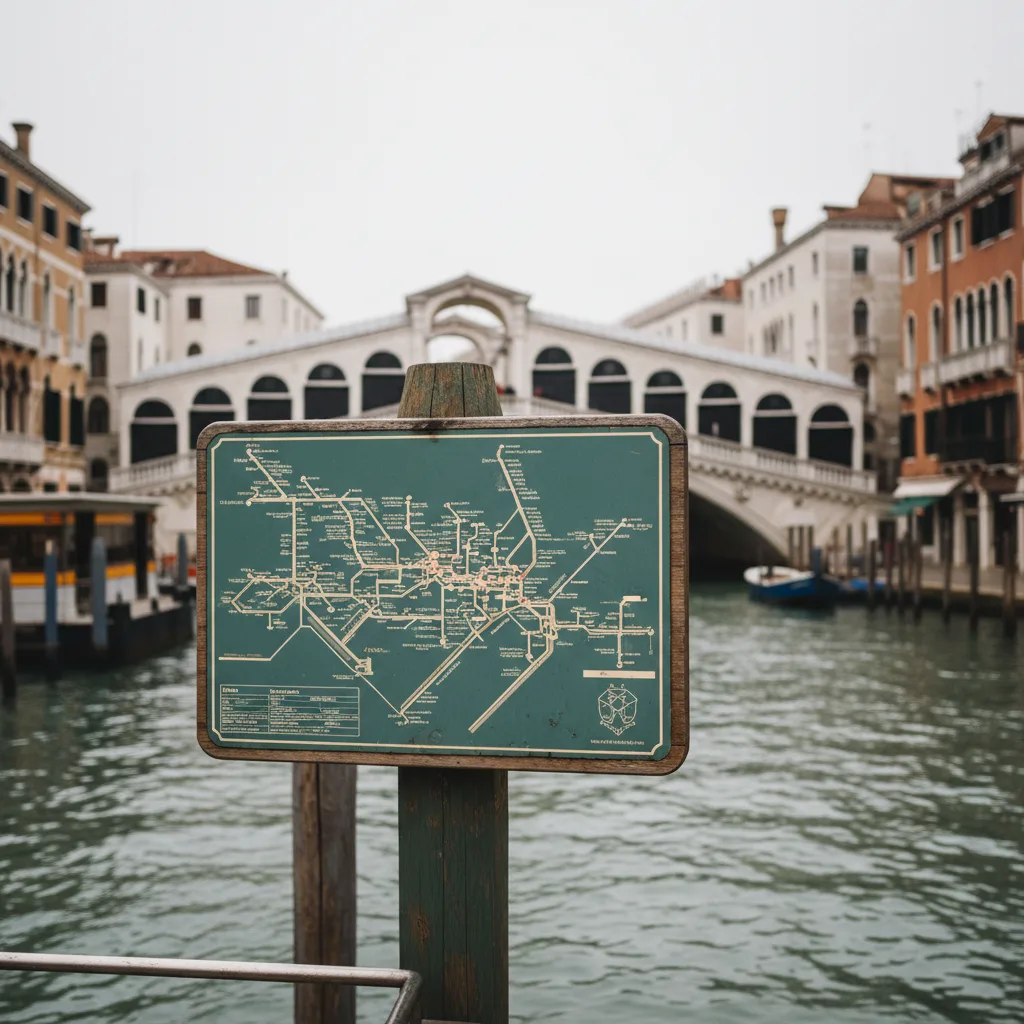
The vaporetto system, in plain terms
The vaporetto is the city’s public water bus, operated by ACTV. A vaporetto is the boat, a pontile is the floating pier, and a fermata is the stop. Boats run from around 05:00 until midnight on main routes. Tickets are flat fare: one price regardless of stop-to-stop distance. Buy passes from the Venezia Unica machines at every major stop or online at veneziaunica.it.
| Ticket | Price | Who it suits |
|---|---|---|
| Single, 75 minutes | 9.50 euros | One hop only; rarely worth it |
| 24-hour pass | 25 euros | Day trip or three-plus rides in a day |
| 48-hour pass | 35 euros | Most two-night stays |
| 72-hour pass | 45 euros | Three full days; best value |
| 7-day pass | 65 euros | Long stays or base-in-Venice travellers |
| Rolling Venice 6-29 yr | ~30 euros (72h) | Students under 30 with a Rolling Venice card |
The lines you actually need
- Line 1. The slow, all-stops service along the Grand Canal. Piazzale Roma to Lido, about 55 minutes end to end. Best for sightseeing from the water, and the most useful for any hotel on the Grand Canal.
- Line 2. The fast, limited-stops express along the Grand Canal and Giudecca. Piazzale Roma, San Stae, Rialto, San Toma, San Samuele, Accademia, San Marco. About 35 minutes end to end. Use it when you are in a hurry.
- Line 4.1 and 4.2. The ring around the outer edge of the main islands and out to Murano. Useful if you are staying in north Cannaregio or going to the glass factories.
- Line 5.1 and 5.2. Similar ring, faster, useful for the Lido and Fondamente Nove.
- Line N. The night service after midnight. One route covers Grand Canal plus Giudecca.
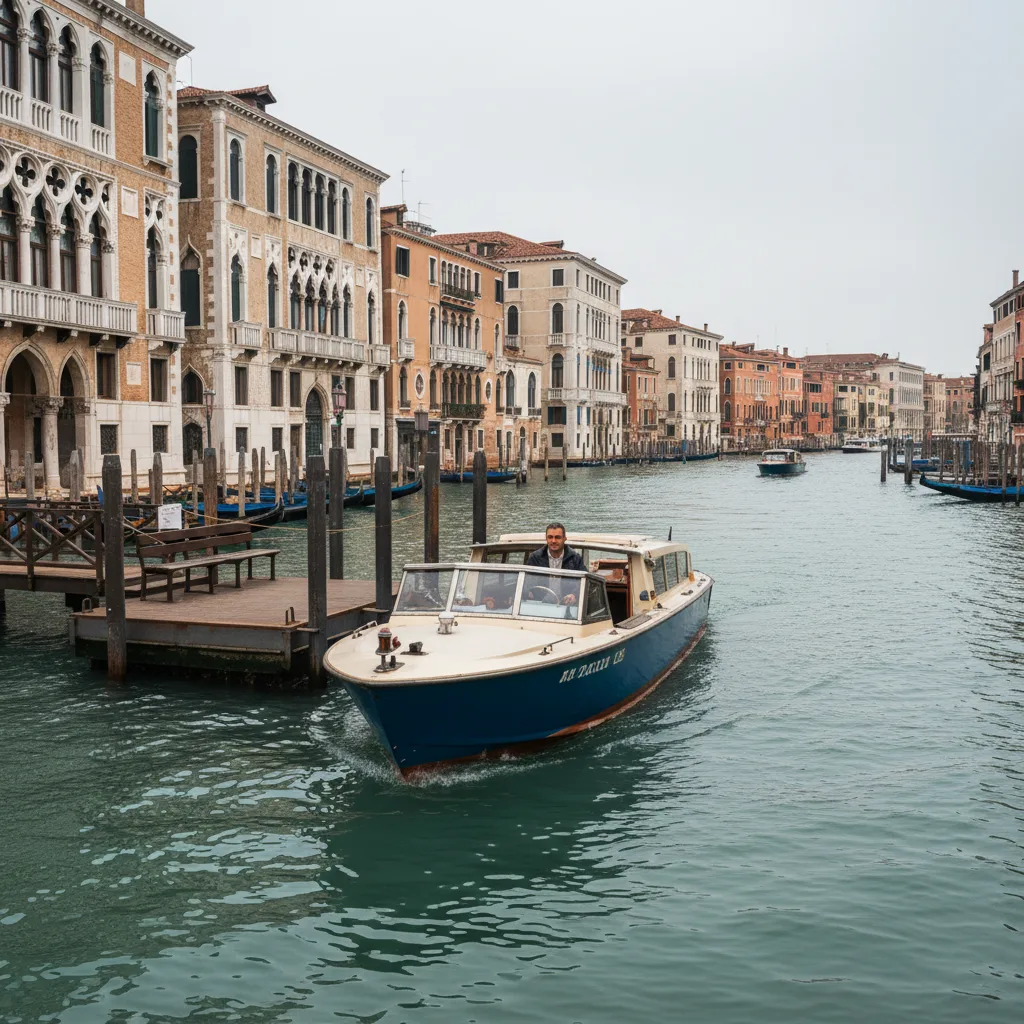
Water taxi: flat fares and when to call one
A water taxi is a private motor launch, licensed and metered (officially). Expect a minimum fare of around 70 euros plus 15 to 25 euros per stop, plus surcharges for luggage, extra passengers, and late nights. A short hop across the Grand Canal at 23:00 can still run 90 euros for two.
Use one for: early airport departure (06:00 flight, hotel in Castello, vaporetto not yet running), heavy luggage on a night arrival, a group of four sharing the cost, or a medical emergency. Avoid for: a half-kilometre hop you could walk, or a sightseeing cruise (you will pay 200 euros for 45 minutes of what a vaporetto does for 9.50).
Walking: the answer for most journeys
Venice’s historic centre is about 3km end to end. From Santa Lucia station to St Mark’s Square is roughly 35 minutes on foot, over four bridges. From Rialto to Accademia is 12 minutes. From San Marco to the Arsenale is 10 minutes. For anything under 20 minutes walking, the boat is slower because you add waiting time at the pontile.
| From | To | On foot | By vaporetto |
|---|---|---|---|
| Santa Lucia station | San Marco | 35 min | 40 min (Line 1), 25 min (Line 2) |
| Rialto | San Marco | 10 min | 15 min |
| San Marco | Accademia | 15 min | 8 min |
| Accademia | Salute | 6 min | 5 min + wait |
| San Marco | Arsenale | 10 min | 6 min + wait |
| Cannaregio (Guglie) | San Marco | 25 min | 30 min (Line 1) |
Traghetto: the forgotten option
A traghetto is a shared public gondola that crosses the Grand Canal at seven specific points, saving you a long walk to the nearest bridge. Locals stand, tourists often sit. Fare is 2 to 2.50 euros per person, paid to the gondolier on boarding. The main crossings are Rialto, San Toma, San Samuele, Santa Maria del Giglio, and Punta della Dogana. They run roughly 08:00 to 19:00, shorter in winter. Use one instead of a 15-minute walk to the next bridge and back.
A sensible three-day transport plan
- Airport: Alilaguna Blue one way, 15 euros. See our airport guide.
- In-city: one 72-hour vaporetto pass, 45 euros. Lets you island-hop to Murano and Burano without paying extra.
- One water taxi if your departure is before 07:00. 80 to 120 euros depending on hotel.
- Everything else: on foot. Good shoes.
Common questions
How much is a vaporetto pass in Venice?
Single fare is 9.50 euros and valid for 75 minutes. Passes are 25 euros for 24 hours, 35 for 48, 45 for 72, 65 for 7 days. Buy on veneziaunica.it or at any Venezia Unica kiosk.
Is Line 1 or Line 2 better for the Grand Canal?
Line 1 for sightseeing, because it stops everywhere. Line 2 for getting somewhere, because it skips most stops. Both take the same ticket.
Do I need a vaporetto pass for a weekend in Venice?
Usually yes. A 48-hour pass at 35 euros covers most itineraries including a Murano or Burano trip. If you only plan two boat rides in total, buy singles.
How much is a gondola ride in Venice?
Fixed fare, set by the city council: 90 euros for 30 minutes during the day, 110 euros for 30 minutes after 19:00. Up to six passengers per gondola. Musical serenade is separate and expensive. For a shared crossing, take a 2-euro traghetto instead.
Can you walk everywhere in Venice?
Within the historic centre, essentially yes. It is 3km end to end with roughly 400 bridges. The vaporetto is useful to hop across the Grand Canal where no bridge is close, and essential for Giudecca, Lido, Murano and Burano.
Do water taxis take credit cards?
Licensed operators do, though some drivers still prefer cash. Always ask before you board, and ask for a printed receipt. Pre-booking through the hotel is the cleanest way to avoid a disputed fare.